Data infrastructureyou own.
The paper, the unsearchable drives, and the software you rent become systems on your own hardware, answering in seconds.
Based in Dallas. On site across Texas. Remote anywhere.
When does the Whitaker contract auto renew?
Answer
It renews for a further twelve months unless either party gives sixty days written notice.
Box 014, Whitaker service agreement
The problem isn't storage. It's that you own nothing your business runs on.
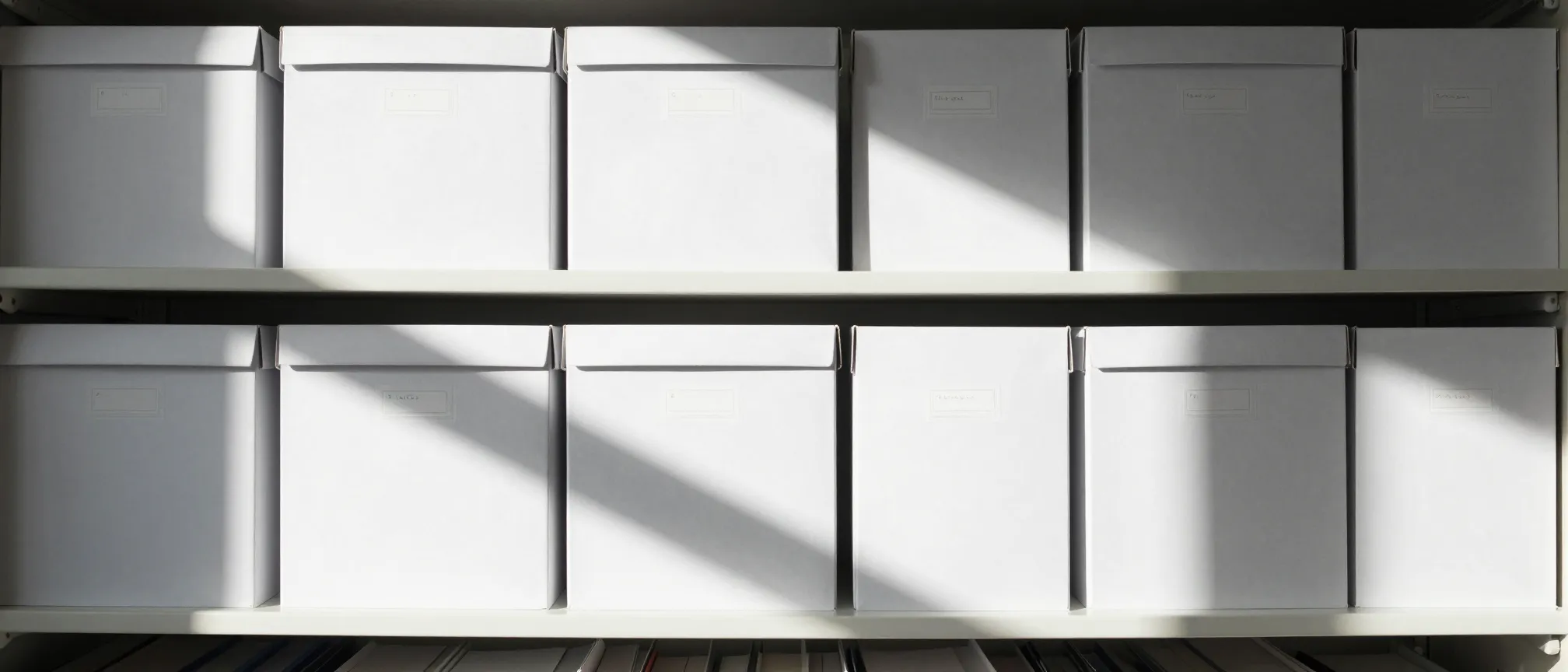
Rented
Every tool charges by the seat, forever.
The bill rises with headcount, and quitting means losing whatever lives inside it.
Hostage
Your records sit in somebody else's cloud.
You can read them today. Whether you can export them, search them, or keep them next year isn't your call.
Unfindable
If someone asked for a record this morning, could you produce it in a minute?
It's rarely one person for one minute. It's whoever is free, for however long it takes. Nobody logs it.
Undocumented
The way it actually gets done lives in one person's head.
It works until that person is on holiday, or leaves, or you hire someone and there's nothing to hand them.
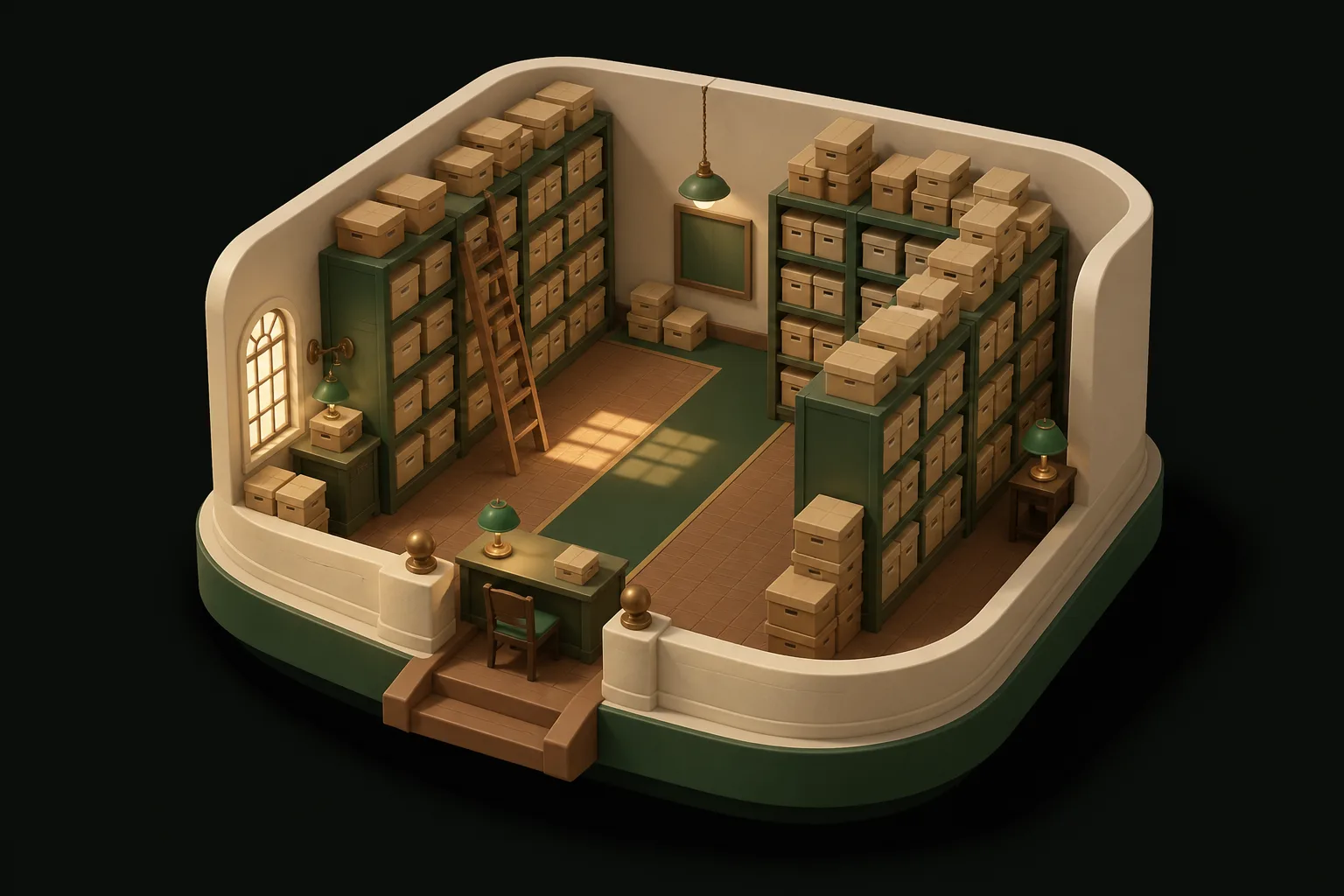
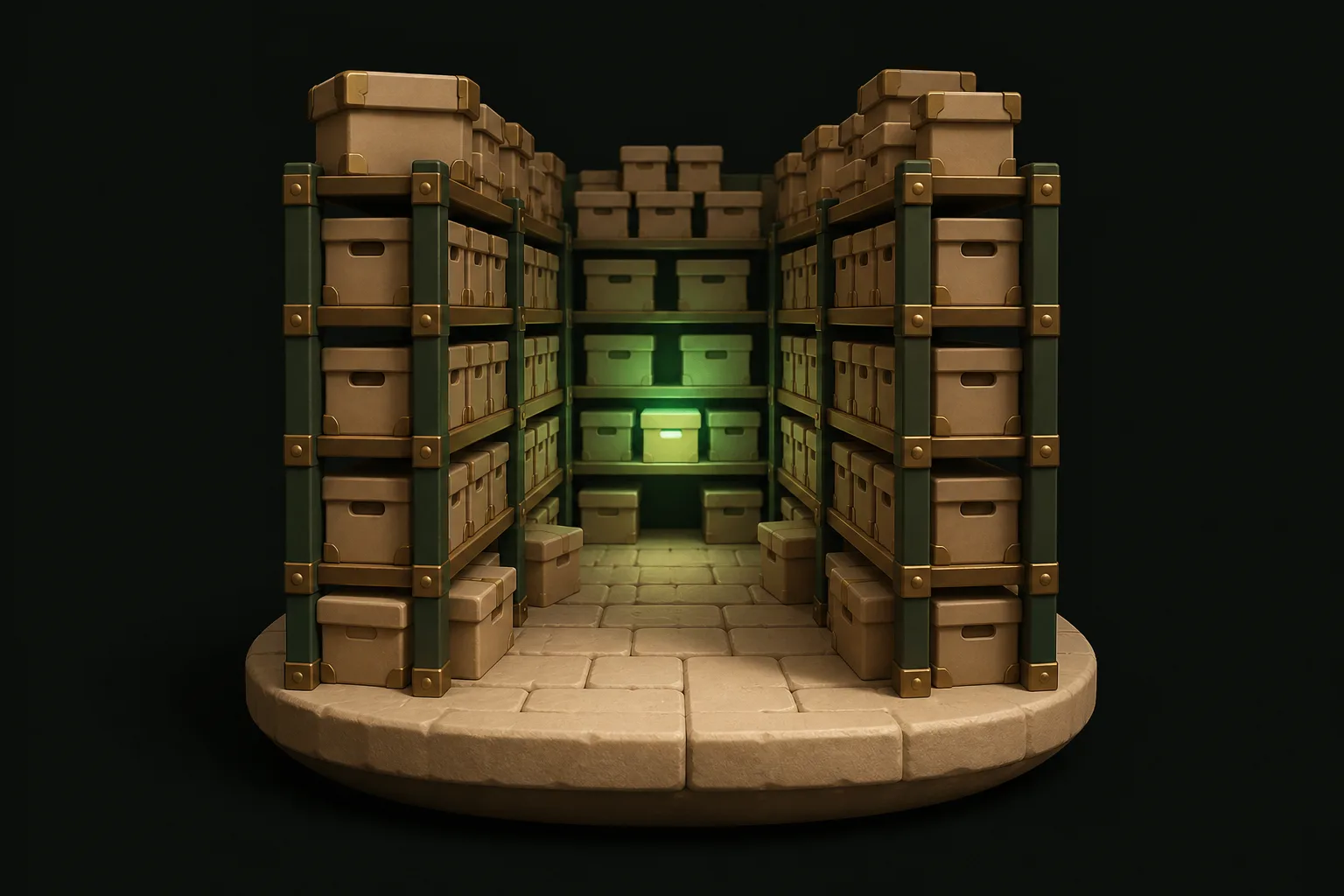
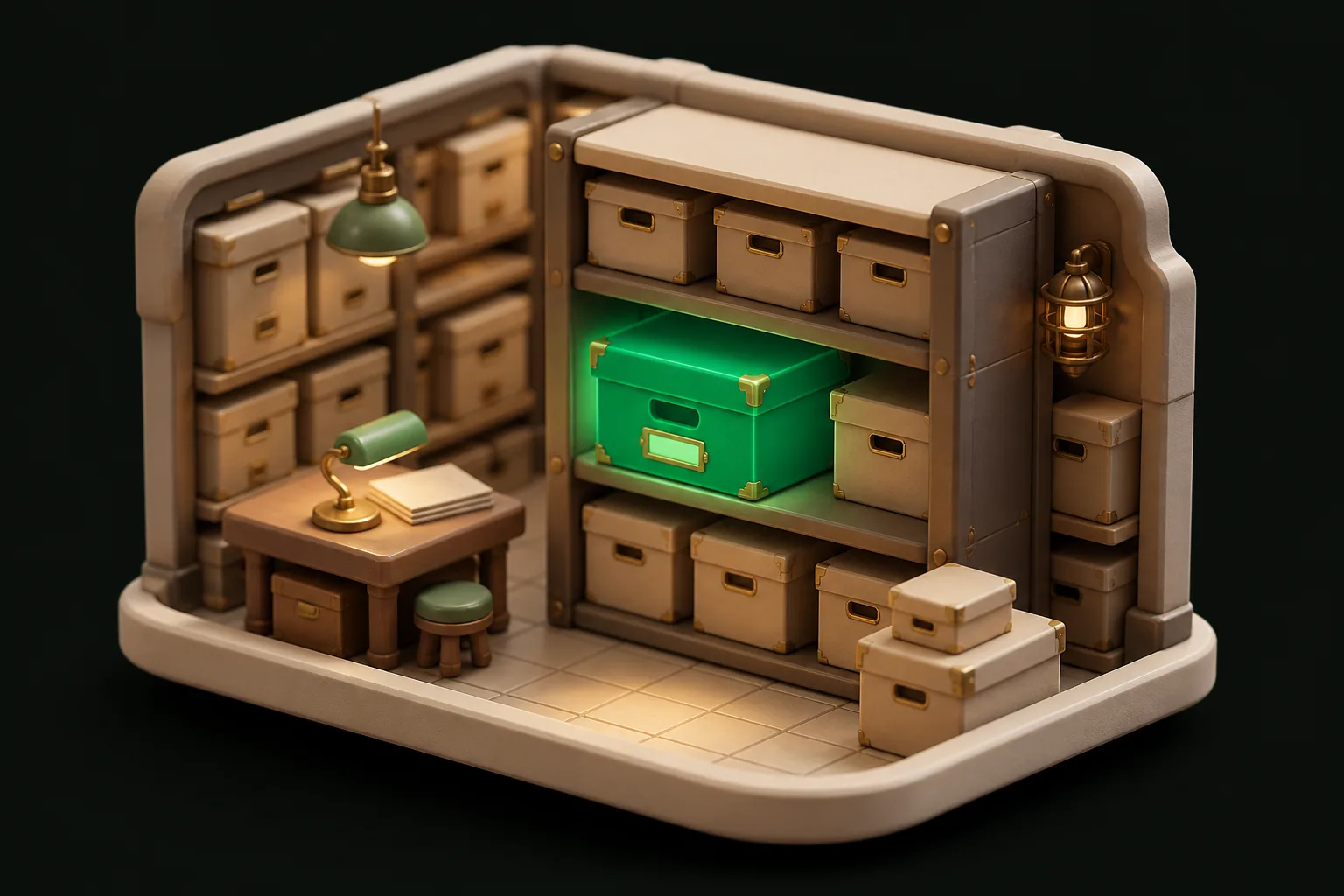
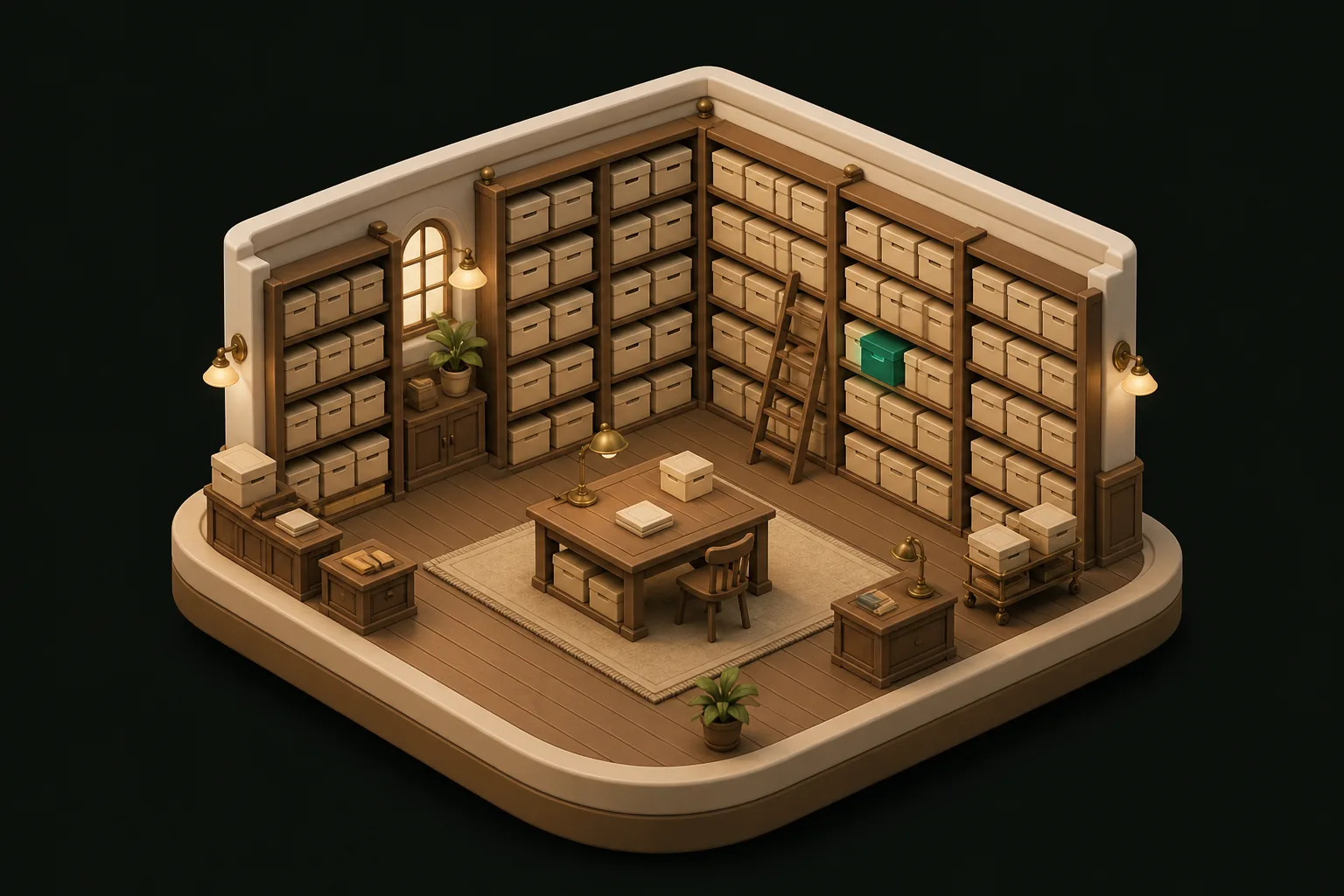
Inside the archive
Every box, findable.
Nothing leaves the building.
The camera is in the room we build for you: shelves of your records on your own hardware, one question away from the page that answers it.
Three things we build. One thing you end up with.
Most clients start with the file room. The archive it produces is the first piece of infrastructure they own outright. Everything after it follows the same rule: your hardware, your key.
The archive
The entry point
Twenty years of paper and the files scattered across your drives become one searchable archive. Ask it a question in plain language. It answers, and every answer cites the page it came from, so you check the source instead of trusting it.
Search that cites
Every answer names its document, and the document opens to the scanned page. The page image is the record.
Retention calendar
What's due for review reaches you each quarter with the citation beside it, instead of a guess.
Health report
What came in, what's due, and what keeping it still costs you. A figure in your inbox, not a dashboard.
Private infrastructure
The systems your business runs on, stood up on hardware you control: document pipelines, internal search, and the plumbing that lets AI work your records without your data leaving the building. No seats. No rent. Nobody between you and your own information.
- Document pipelines
- Internal search with citations
- Private AI plumbing
Scoped at the audit
The operations desk
The back office you never got around to building. One process written down each month so it stops living in somebody's head, your retention calendar reviewed with citations, and a report with the figures in it.
- One function written down, each month
- Retention calendar reviewed, with citations
- A report with the figures in it
Monthly, one function at a time
| Category | Window | Status |
|---|---|---|
| Vendor invoices, 2017 | 7 years | Cleared Jan |
| Timesheets, 2021 | 4 years | Due Nov |
| Bank statements, 2018 | 7 years | Due Dec |
Each row cites the statute it follows. The decision to destroy stays yours, in writing.
- What you do
- Point at the room and the drives. We come to you and do the lifting, and you keep working while we go.
- What it takes
- The window is quoted in writing before you commit, on your actual boxes rather than an average. If we can't hit it, you hear that before you sign.
- What stays yours
- Nothing is destroyed without your written authorization, and the archive keeps working if you cancel.
We run our own business on the same stack we install: documents, contracts, invoicing, and code, all self hosted. We're the first client of everything we sell.
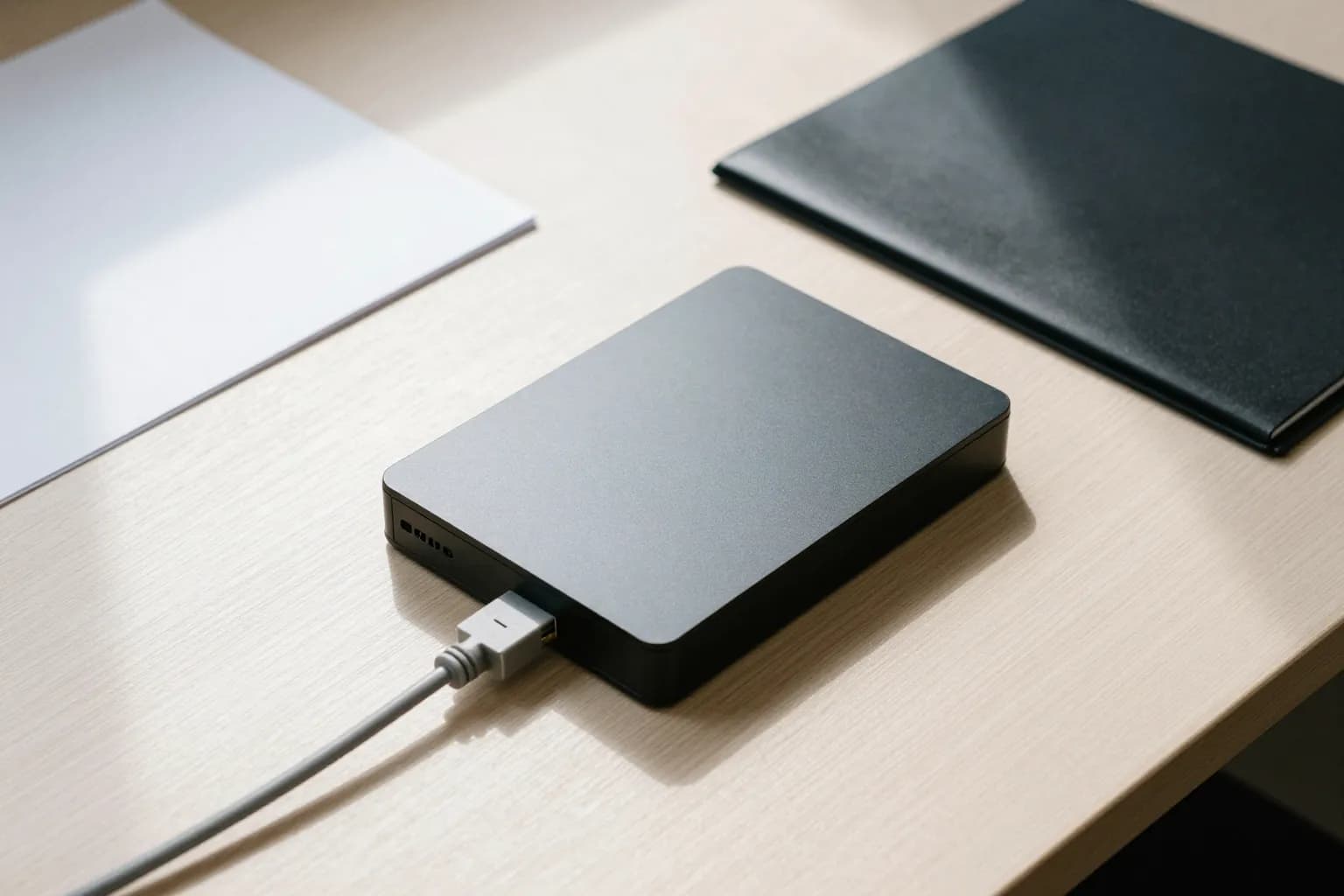
One box in your office. Everything on it, yours.
The whole install runs on one small machine you own, sized to what you actually have. If we disappeared tomorrow, it wouldn't notice.
Your hardware
The archive
Every page and file, indexed and searchable, cited back to the page image.
Pipelines
New paper and files flow in, get named, and land where they belong.
Search
Plain language in, cited answers out. Nothing leaves the building.
Backups
Encrypted copies on a schedule you set, kept in a place you choose.
Under your key. We hold no copy.
Four promises.Three of them cost us money.
A guarantee that costs nothing to break is marketing. The fourth is a posture rather than a remedy, and saying so is cheaper than having you notice.
Nothing here costs you anything to find out. Book the free 30-minute audit and keep the findings either way.
The questions people actually ask.
Do my records ever leave my building?
For confidential files, no. We scan on site, in your office, and the boxes never leave the building. For bulk archives, where you'd rather we took them, we can scan off site under sealed tote custody with the same numbered manifest and checksum. Which one applies to you is decided at the audit and written into the scope before anything moves. When the digitizing is done the archive runs on your hardware, under your key, and we keep no copy of your records.
What happens to the paper afterward?
That's your decision, not ours, and we won't make it for you. Your paper stays yours. You can have the originals back, keep them in storage, or authorize destruction in writing. If you choose destruction, we arrange it with a certified shredding firm at that point, name them to you before anything moves, and the certificate comes back into your archive. Nothing is destroyed without your signature on the authorization.
Can't you just host it for us?
We could, and we won't. Hosting your records would make us one more vendor holding your data, which is the exact dependency this work exists to remove. Everything we build runs on hardware you own. If you don't have the hardware, we spec it, you buy it, and it's yours. Our job is to set it up, hand you the key, and be replaceable.
We already pay for Google Drive. Why would we need you?
For search alone, you probably wouldn't. Any firm can put document search on a shared drive in an afternoon, and if that's all you want, do that instead and keep your money. What a drive won't do is get twenty years of paper into it correctly, keep it current as new files arrive, or surface which categories are past their cited retention window this quarter. That's the work, and it's the part that's done by a person rather than a product. The honest comparison isn't against a subscription you already have. It's against what a part-time records clerk costs, or the hours somebody here already spends hunting for files.
How long does it take?
The window is quoted in writing at the audit, on your actual boxes rather than on an average, because box density varies more than people expect. Larger projects get a written schedule in the agreement. We'd rather give you a date we can hold than a fast one we can't.
What if a page comes back unreadable, or something's missing?
You'll hear about it from us first. Every box is reconciled against a numbered manifest with a checksum, so a page that failed to read comes back as a flagged line on the reconciliation rather than a gap you discover in four years. We rescan flagged pages at our cost. Where the original is genuinely illegible, we tell you that in writing instead of quietly passing it through.
You're a small firm. What happens to our systems if you're not around?
They keep working, because they were never ours to switch off. Everything runs on your equipment and you hold a copy of the key from the day we hand it over, so nothing about it depends on us being reachable. Before your first box is scanned you also get the recovery runbook in writing, so another vendor or your own IT could take it over without needing anything from us. That's the point of building on your hardware rather than renting it back to you.
Do I have to keep paying you after the build is done?
No, and this is the honest answer rather than the sales one. The archive is yours, it runs on your equipment, and it keeps working whether or not we're involved. What ongoing Care buys is that somebody keeps it current: patched, fed with your new files, and with your retention schedule reviewed each quarter so what's due for review reaches you with its citation instead of sitting unnoticed. Plenty of clients take the archive and run it themselves. That's a fine outcome.
How hard is it to cancel?
Thirty days in writing, which is the same notice we owe you. It's worth saying what's not in the agreement: there's no minimum term to run out, nothing renews automatically, and there's no cancellation fee. You pay for work already done and accepted, and that's the end of it. We'd rather tell you this before you sign than have you find it out afterwards. If leaving were made deliberately harder than joining, you shouldn't trust us with your records in the first place.
The free 30-minute audit
A short call first to check the fit, then we come to you. You get the findings either way, in writing, whether or not you hire us.
- What's actually in the room and on the drives, counted and categorized.
- What storage, seats, and subscriptions are costing you now, in dollars per year.
- Which categories are past their retention window, with the citation, so the decision is yours to make.
- Where the work depends on one person remembering, found by watching one real request get answered.
- A written scope and a fixed price, if you want one. We never bid by the page.
- The findings in writing, yours to keep and use with any vendor you like.
What happens next
- Pick a time on the booking page. It takes about a minute.
- We confirm, and you know exactly who is coming before anyone arrives.
- You get the findings in writing either way, whether or not you hire us.
The booking page opens in a new tab. It runs on Google Calendar, and your records never pass through it. What that means.
You will know who is coming before they arrive. The same small team works your project from the first visit to the last, and nobody sets foot in your building who was not named to you in advance.
Before we handle a single box we will be bound for professional liability, cyber, and valuable papers and records cover. You get the certificates and a sample custody manifest in writing first. No paper moves before that's in your hands.